
Company town
- dtmillerlexky
- Sep 20, 2023
- 5 min read
Updated: Jan 16, 2024
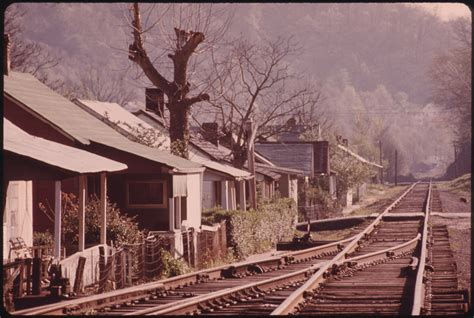
The tiny southern West Virginia coal camp of Helen, where I grew up, was once thriving. Its two coal mines supported a population of more than eleven hundred in the boom years of the 1940s and early 50s. But because of mechanization, depressed demand for coal, and the natural limit to how much coal can profitably be dug from a mine, the town's mines had been closed down and only about 300 people lived there by 1956. It was half an hour on bad roads to any real city.
Our large family--my father and mother and my older siblings, all of my grandparents, three of my aunts who never left home, and the young daughter of one of them--moved to Helen just before I was born and the town's population would continue to dwindle and its houses and other buildings to gradually disappear all through my childhood.
Helen has no claim to fame other than that long-serving US Senator Robert Byrd once pumped gas at its little station in the 1940s. If you go a few miles north on the only road that passes through town, then take a one-lane road west, you'll be in Slab Fork, the hometown of the singer/songwriter Bill Withers. His father was a coal miner like mine, but Withers put the town and the state in his rearview mirror as soon as he could and had no nostalgia for it.
About fifty little coal camps like Helen were scattered around the Winding Gulf coal field in the early twentieth century, built by coal companies extracting valuable timber and minerals. In such camps, the company owned all the houses and deducted miners' rent from their paychecks. The company also deducted the town doctor's fee and anything the miners bought on credit from the company store. Most miners didn't have cars and had no choice but to pay its inflated prices.
Miners weren't paid in real money anyway. Until the late 1950s, they were paid in a type of private money called scrip. It could only be used at stores owned by that particular coal company.
We only knew of it through rumors, but in the 1930s some companies used a private contract called Esau scrip. The reference is to the story in Genesis about Jacob forcing his starving brother to trade his birthright for a bowl of pottage.
The Esau wasn't physical scrip but a special type of loan contract. It was typically offered to the wives of men who were injured and out of work and could only be used for food and other necessities at the company store and it expired in thirty days. If a miner returned to work within that time, his wages were withheld to cover the debt. If he didn't return to work, the Esau converted to a loan secured by the miner's possessions.
But since miners had little of value, sometimes the repayment was demanded from the wives' bodies. The alternative was homelessness and starvation.
The rise of the United Mine Workers union and labor protections under Franklin Roosevelt put an end to this practice, and improved roads during the Eisenhower era gave miners new freedom to shop elsewhere.
Sometimes mines reopened when the inevitable bust in the coal market turned into a boom, but in many small towns there was simply no more coal to be mined. When it became clear that Helen's mines would never reopen, the company owning the town began the process of shutting the town down.
The process accelerated quickly. More and more, those left in Helen were widows or families of disabled men who couldn't afford to live elsewhere. The coal company first phased out accepting scrip and then closed the company store entirely.
Because the company owned all the houses, if a miner was killed his widow could be evicted with no notice and perhaps nowhere to go. Before the union, miners were less valuable to a company than the mules that hauled the coal to the surface. The union fought hard for death benefits for the miners but could do little about the company-owned rental houses. When a better house became vacant, miners vied for it based on their seniority with the company.
Helen's population seeped away and the company closed the bathhouse, then the movie theater, and gradually everything else. The company gave miners the option of purchasing the homes they had been renting but many couldn't afford to buy them, or chose to move elsewhere rather than commute to a new job. So, unlike in many small towns, there were houses available for purchase in Helen.
My father's family was evicted in 1956 from the large subsistence farm ten miles south of Helen it had leased from the Pocahontas Coal Company for more than fifty years, and given thirty days' notice to vacate.
My father's many siblings had relocated to Cleveland, Detroit, and California by then, and he became the family patriarch by default. Helen was the only town where he could find houses for not just his wife and two kids but both his and my mother's elderly parents and the several aunts.
My father described how different Helen was from the farm. In the country, streams ran clean and clear, but in Helen the creek that paralleled the main road through town was unfit to even approach. Much of the sludge from the mines upstream choked out the marine life and only a few houses had septic tanks; others had "straight pipes," flushing sewage directly into the stream. Some had outhouses not far from the stream. We children were warned never to wade in or touch the water.
The closure of the local mines didn't improve the air quality. The town was only about two hundred yards wide, set down between steep hills and parenthesized by railroad tracks. The tracks ran very close to many houses on both sides of the valley, rail cars constantly rumbling by full of coal from the many other still-productive mines in the area.
A few houses in Helen had no electricity but the three my father bought on installment in 1956 did. The houses were barely habitable but were all he could afford. He worked hard on the night shift in the mines, then spent his days installing indoor plumbing, painting, and patching holes in the walls.
For several years he did nothing but work night shift, work on the houses during the day, take a sleeping pill so he could rest a few hours, and wake up and go to work again as everyone else was going to sleep.
He was always exhausted but he brought his and my mother's family to Helen, and they settled into their three strange new homes during an uncommonly mild winter, just in time for me to be born.


Our family stories share so much in common. Company towns were a unique culture. Momma had nothing good to say about any of them. She saw a man gunned down in the street in Parcoal WVa one time, because he dared to cross the mine owner. I felt like I was walking down the railroad track with ya in your descriptions.
An amazingly stoic telling of a tragedy. Sparse with emotion, words uttered simply, but who could not read it and realize that the term “slavery” needs to be expanded. Much like today’s corporations, masses work at low wages while owners and CEO’s take home the bounty. I suppose through history that this is commonplace for mankind, from the agrarian villages which fed all of Russia and China, to the men who built the Pyramids, to steelworkers who endure heat and danger rolling red-hot steel. I just heard today that there are 2.5million less high school graduates going to college than there were 4 years ago, and their future careers will be as Starbucks clerks, grocery store stockers, and warehouse workers,…